

In the intricate world of oilfield machinery, union fittings serve as the linchpin of fluid transport systems, enabling seamless connections between pipes, manifolds, and valves. A critical aspect of these fittings lies in differentiating their male and female components—a distinction that ensures operational efficiency and safety.
The Basics of Union Terminology
Union fittings, often referred to as "hammers" or "flanges," consist of four primary components: the male end (plug), female end (socket), wing nut, and sealing ring. The male end, characterized by its spherical design, inserts into the female end’s tapered socket, forming a secure connection sealed by a rubber gasket. This design, reminiscent of electrical connectors’ "male-female" nomenclature, ensures directional compatibility and prevents mismatches.
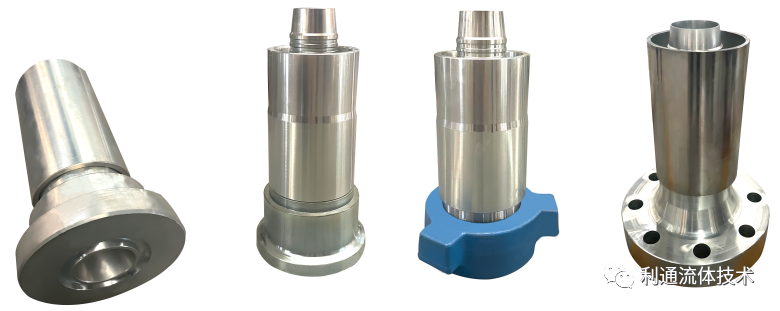
Key Design Differences
Structural Morphology: The male end features a protruding, ball-shaped tip, while the female end presents a recessed, funnel-like opening. This physical disparity is not merely aesthetic but functional, as it dictates the fitting’s assembly and sealing mechanism.
Thread Patterns: Both ends employ ACME (trapezoidal) threads, though variations exist. For instance, 3" Fig602 unions typically feature 3 threads per inch, while 4" Fig1002 models may use 4 threads per inch. These discrepancies underscore the importance of selecting matching pairs from the same manufacturer to avoid compatibility issues.
Sealing Mechanisms: High-pressure variants like Fig1502 unions incorporate O-ring grooves on the male end, whereas others, such as Fig1003, position the O-ring on the female end. This distinction directly impacts sealing integrity under extreme conditions.
Industrial Applications
Union fittings find extensive use in hydraulic systems, drilling rigs, and fracturing equipment. For example, Fig206 unions, rated for 2,000 PSI, are ideal for low-pressure air and water lines, while Fig1502 unions, withstanding 15,000 PSI, are indispensable in high-pressure fracturing operations.
Understanding the nuances between male and female union ends is paramount for engineers and technicians. By adhering to manufacturer-specific standards and prioritizing component compatibility, operators can mitigate risks, optimize performance, and extend the lifespan of critical infrastructure.