

Air hoses connect to air compressors and supply compressed air to tools that require air for operation. Choosing the right air hose is essential to get the best performance from your tools.
The 5 main factors to consider are Length, Diameter, Material, Pressure and Coupling Type. Using the wrong hose can cause irreparable damage to your air compressor and equipment.
Length
The length of an air hose determines how far from the compressor system you can use your air tools. While long hoses can provide you with more reach, they will also lose more air/pressure along their length. This is a concern for any application where you will be moving the hose from station to station.
For example, framing projects or roofing work require a longer hose that allows you to move from area to area without losing too much control. For these applications, a 50- to 100-foot hose may work well.
The size of an air hose is determined by the tool that you will be using and the maximum pressure it can withstand. Most air tools that only require short bursts of air, such as a pneumatic nailer or paint gun, work well with a small diameter hose. However, larger tools that need a constant supply of air, such as an air hammer, require a wider hose.
Diameter
Air hoses are typically available in sizes from 3/8" to 1/2", although other diameters can also be found. Choosing the right size will depend on the CFM (cubic feet per minute) requirements of your air tools, and the maximum pressure your compressor can produce.
The internal diameter of an air hose, referred to as the ID, can vary much less than its outer diameter, and is typically listed in both decimal and metric units. The higher the ID, the more compressed air it can hold; however, a larger ID will also increase weight and make the hose harder to maneuver, especially if it has a large number of bends and joints.
Longer lengths will also cause a loss of pressure as the air travels through the hose; this effect is exacerbated by anything that obstructs the flow of air, including couplings, knots and bends. To combat this, TEKTON hoses are designed with bend restrictors at the hose ends that prevent kinking by limiting the amount of stress placed on the hose in high-stress areas.
Material
Air hoses transport many different media and need to be built with a variety of materials. They must withstand age, weather and oil resistance to ensure they can deliver stable pressure in multiple workplace environments and conditions.
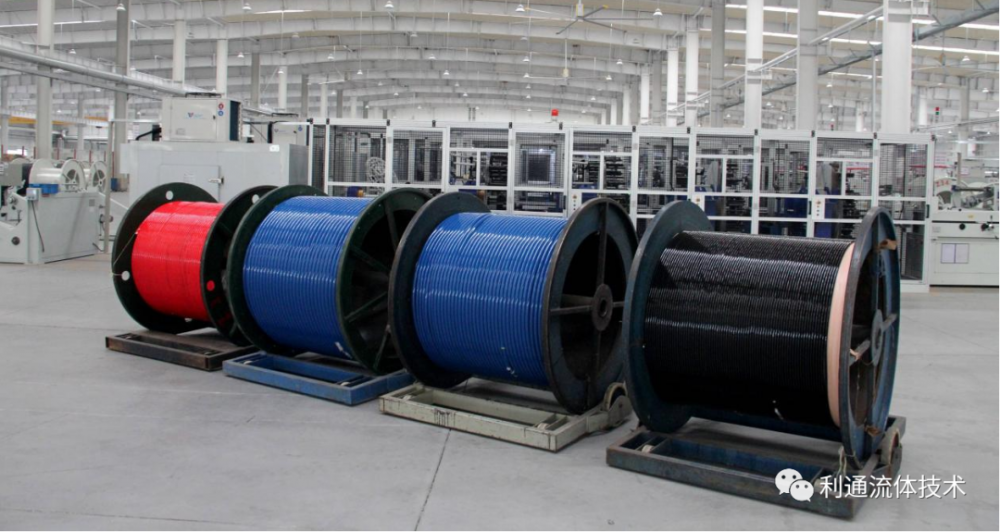
Generally, industrial air hoses are made from hard-wearing rubber, EPDM or a nitrile/rubber blend. This durable material is kink resistant, abrasion resistant and can withstand high levels of air pressure. It also has the advantage of not fading due to sunlight or extreme temperatures.
Another popular choice is a retractable or coiled hose, which can appear similar to a traditional telephone wire. This type of hose is designed to be a trip hazard-reduced solution in busy workplaces by creating an easy-to-reach coil of hose that can be easily pulled out and used as required.
These hoses often use quick-release couplings which join the hose to a compressor or tool. They are also known as couplers fittings or manifolds.
Pressure
Air hoses deliver compressed air for many different applications and play an essential role in powering pneumatic hand tools. They are also found in road vehicles, such as tractors and semi-trailers that use them for their air brakes. Air and gas hoses are usually constructed with a wide variety of materials, sizes and designs that offer flexibility, durability and resistance to heat, chemicals and abrasion.
It is important to know the maximum pressure rating of an air hose before selecting it for a specific application, especially when using it in conjunction with other equipment and at elevated temperatures. Operating a hose at a higher than specified pressure can cause the hose to rupture or swell, resulting in a loss of airflow and decreased performance.
Connectors (also known as couplings fittings or splitters) are used to join hoses to compressors and tools or to divide a single length of hose into multiple sections. They can be threaded metal fittings, push-lock types or quick-connects. Choose one that will work well with your air compressor or tool, preferably with a nozzle or spray gun that is compatible with the chosen connector style.