

In modern industrial production, steam, as an important energy and process medium, is widely used in chemical, papermaking, food processing, pharmaceutical and other fields. In these industries, high-pressure steam hoses have become one of the indispensable equipment with their excellent performance. In particular, steel wire reinforced industrial pipes with a temperature resistance of up to 180°C have shown excellent durability and reliability under high temperature and high pressure environments, providing strong guarantees for the production of many companies.
1. Basic characteristics of high-pressure steam hoses
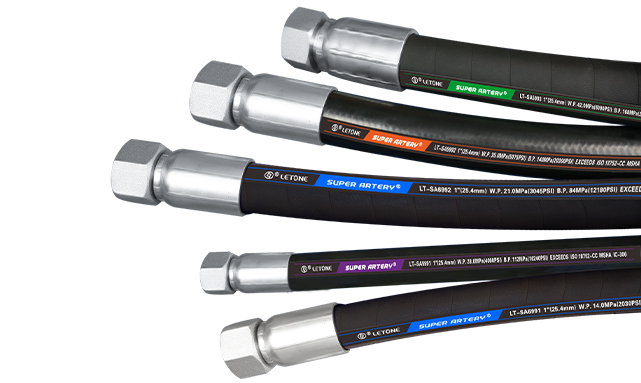
High-pressure steam hoses are pipes specially designed for conveying high-temperature and high-pressure steam. Their materials are usually special synthetic rubber and composite materials such as nylon and steel wire, designed to withstand higher pressures and temperatures. Compared with ordinary hoses, high-pressure steam hoses can not only withstand higher internal pressures, but also have more outstanding temperature resistance. Many high-quality high-pressure steam hoses can work safely in an environment of 180°C to ensure the efficient operation of the equipment.
The structural design of this type of hose generally includes an inner layer, a reinforcement layer and an outer layer. The inner layer is mainly responsible for the transportation of liquids, and the reinforcement layer is woven from multiple strands of steel wire to provide the necessary strength and flexibility. In order to prevent environmental corrosion and wear, the outer layer is usually made of wear-resistant, oil-resistant and aging-resistant materials. This multi-layer design gives it superior tensile, compressive, aging and corrosion resistance, providing reliable protection for various demanding application scenarios.
2. Application fields
High-pressure steam hoses are widely used in various industries and can be called the "driving engine" of industrial transformation and upgrading. It is used to transport high-temperature synthetic gas in the chemical industry, steam sterilization, heating and other processes in the food industry, and even in the medical field. With its excellent high-temperature resistance and antibacterial properties, it is used for steam sterilization in medical equipment. In addition, in some power plants and paper mills, high-pressure steam hoses are often used to transport high-pressure steam to ensure efficient use of energy.
Especially in some equipment that needs to run at high temperature for a long time, high-pressure steam hoses can minimize failures caused by thermal expansion and contraction, effectively improve the service life of the equipment, and reduce the maintenance cost of the equipment. Therefore, more and more industrial enterprises choose to install this advanced hose to deal with various problems that may be encountered during the production process.
3. Key factors for choosing high-quality high-pressure steam hoses
When purchasing high-pressure steam hoses, there are several key factors that need special attention:
- Temperature and pressure tolerance: Different industrial applications have different temperature and pressure requirements for steam hoses. Therefore, when choosing, you must choose hoses that can meet temperature and pressure standards based on the specific actual use.
- Durability and anti-aging ability of materials: High-quality high-pressure steam hoses should have good anti-aging properties and are not easily degraded by external conditions such as high temperature and ultraviolet rays. Especially when working outdoors or in harsh environments, the durability of materials is even more important.
- Applicability: Different industries have different requirements for hoses, so it is necessary to ensure that the selected steam hose is compatible with the medium being transported.
- Manufacturing standards and certifications: Ensure that the manufacturer has relevant quality management system certifications (such as ISO9001) and necessary product certifications in the industry, which can fundamentally guarantee the quality and performance of the product.
4. Maintenance and care
Even high-quality high-pressure steam hoses need regular inspection and maintenance during long-term use. Here are some basic maintenance recommendations:
- Regular inspection: At regular intervals, the hose should be fully inspected to see if there are any signs of aging, cracks, or breakage. If any problems are found, they should be replaced in a timely manner.
- Cleaning: Regularly clean the hose with a mild detergent to avoid the accumulation of sand and dirt in the hose, which will affect its service life.
- Proper storage: When not in use, the hose should be properly stored to avoid direct sunlight, high temperature or humid environment. It can be hung or rolled up for storage to prevent deformation.
- Avoid overload: During use, the temperature and pressure limits of the hose must be strictly observed to avoid dangers such as bursting due to overload.
5. Market prospects and development trends
With the advent of Industry 4.0, intelligent manufacturing and automated production will become the future development trend. This will further increase the technical requirements for high-pressure steam hoses. In the future, the research and development of new materials and the improvement of production processes will promote the further optimization of its performance.
At the same time, the enhancement of environmental awareness has also prompted enterprises to pay more attention to environmental protection in the selection of raw materials. In the future, high-pressure steam hoses must not only meet strict industrial standards, but also take into account environmental performance. In addition, strengthening the intelligence of products, such as monitoring the status of hoses through sensors, will be a highlight of industrial development.
In short, high-pressure steam hoses play an increasingly important role in the industrial field, and their potential market space is huge. When selecting and using them, companies should pay attention to the performance, quality, maintenance and future development trends of products, and continuously improve production efficiency to cope with the ever-changing market environment.